
Why owners end up writing briefs for the help they hired
 Katie LendelFounder & Strategic Marketing Lead
What I see most often is an owner who hires help and then spends Monday morning writing briefs for it. A freelancer, a tool, an agency. The names change. The Monday morning doesn't.
Nobody plans this. The hire is sensible, the help is good at what it does, and the first few weeks feel like relief. Then, a little at a time, the owner becomes the one who decides what gets made, explains why, checks it against what's in their head and passes the notes along. That's a project manager, with a title nobody offered.
Here is why the pattern is so common, why it isn't a character flaw and usually isn't the helper's fault, and what changes when one partner owns the work. I run ScaleLounge, so I have a stake in the answer. I'll also say where a brief is exactly the right tool.
What it looks like from the owner's chair
Here is a week as owners describe it to me:
- A message arrives asking what the posts should be about.
- The owner writes a few paragraphs of background, because the last few paragraphs went to a different helper.
- A draft comes back that's close but off, so the owner explains what "off" means.
- The social person, the email person and the website person each need the news about a new service, and the owner tells each of them separately.
- By Friday, the only person who can say what's planned for next month is the owner.
None of those tasks is hard. Together they're a second job.
ScaleLounge takes this work off an owner's plate, from the strategy to the work itself. See how ScaleLounge works.
Why it happens
Four things work together here, and none of them is anyone's fault.
Help is hired for tasks, not for the outcome
A freelancer is hired to write posts. A tool is bought to draft captions. An agency is signed to deliver a list of items. Each one does what was asked.
What nobody was asked to do is decide what the posts are for, how they connect to the website and the emails, and what comes first this season. That decision still has to live somewhere, and the only person nearby is the owner.
The context lives in the owner's head
Who the best customers are, what's been tried before, which service matters most this quarter, what the business never says. A helper can't see any of it, so the brief becomes the way it travels.
A tool is the clearest case. It waits for a prompt, and a prompt is a brief by another name. Every new piece needs a fresh transfer, because the helper starts each task knowing only what the brief says.
Each helper sees one slice
The social freelancer sees social. The person who built the site sees the site. A writing tool sees whatever was typed into it.
Only the owner sees all of it, which makes the owner the connection between the parts. Connecting the parts is project management, whether or not anyone calls it that.
Stepping in feels reasonable every time
Writing the brief is quicker than waiting for a helper to guess. It works well enough, so the habit sets.
No single decision in that chain is a mistake. The pattern is built entirely from sensible ones, which is why it's so hard to see from the inside.
The brief isn't the problem
I want to be fair to briefs, because a good one is a useful thing. A logo, a photo shoot, a one-time website build: work with a clear edge and a clear finish deserves a brief, and a specialist does it better with one. Even at ScaleLounge, a website build is scoped as its own project.
The trouble starts when briefs are the only way the work moves. Ongoing marketing isn't a project with an end. It's a steady stream of decisions, and when a stream of briefs feeds it, the owner becomes a permanent part of the machinery.
The question I come back to is a simple one. If the owner took a week off, what would happen to the marketing? When the honest answer is that it would stop, the owner is the one holding the plan together.
What changes when one partner owns the work
Ownership changes who holds the plan. I lead the direction, create the work and stay accountable for the scope we agree. Owners work with me directly, not through an account team. They bring the context, and I bring the plan and the follow-through.
On the site I put the split in a few words. Inside the agreed scope, I own planning the work and keeping it on course, creating the content, publishing after the owner's approval and following through month after month. The owner keeps what only an owner can do: the priorities, the business context, the approvals and the decisions nobody else can make.
In practice the work runs in four steps:
- The owner shares the business, the customers and the priorities in the intake.
- On every plan, the strategy comes back within 24 to 48 hours of the completed intake.
- The work arrives in one place, on a laptop or a phone, and the owner approves what's ready.
- I keep it moving: publishing after approval, reporting and the next round, inside the agreed scope.
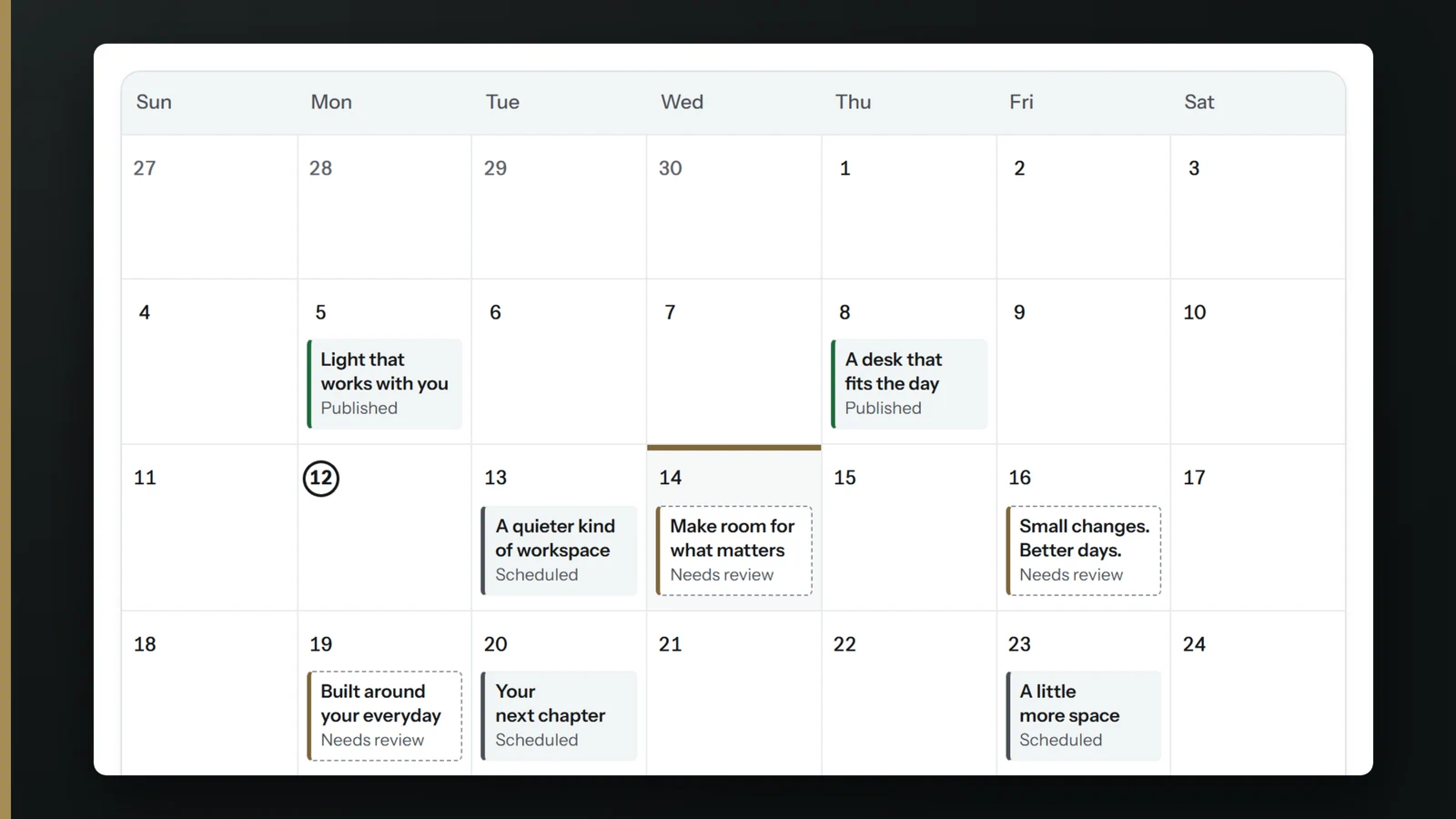
The biggest difference is the direction the questions run. In the old setup, the helper asks the owner what to do next. In this one, the partner arrives with a recommendation and the owner reacts to it. Reacting is far lighter than composing. It's the difference between writing a brief and reading a plan.
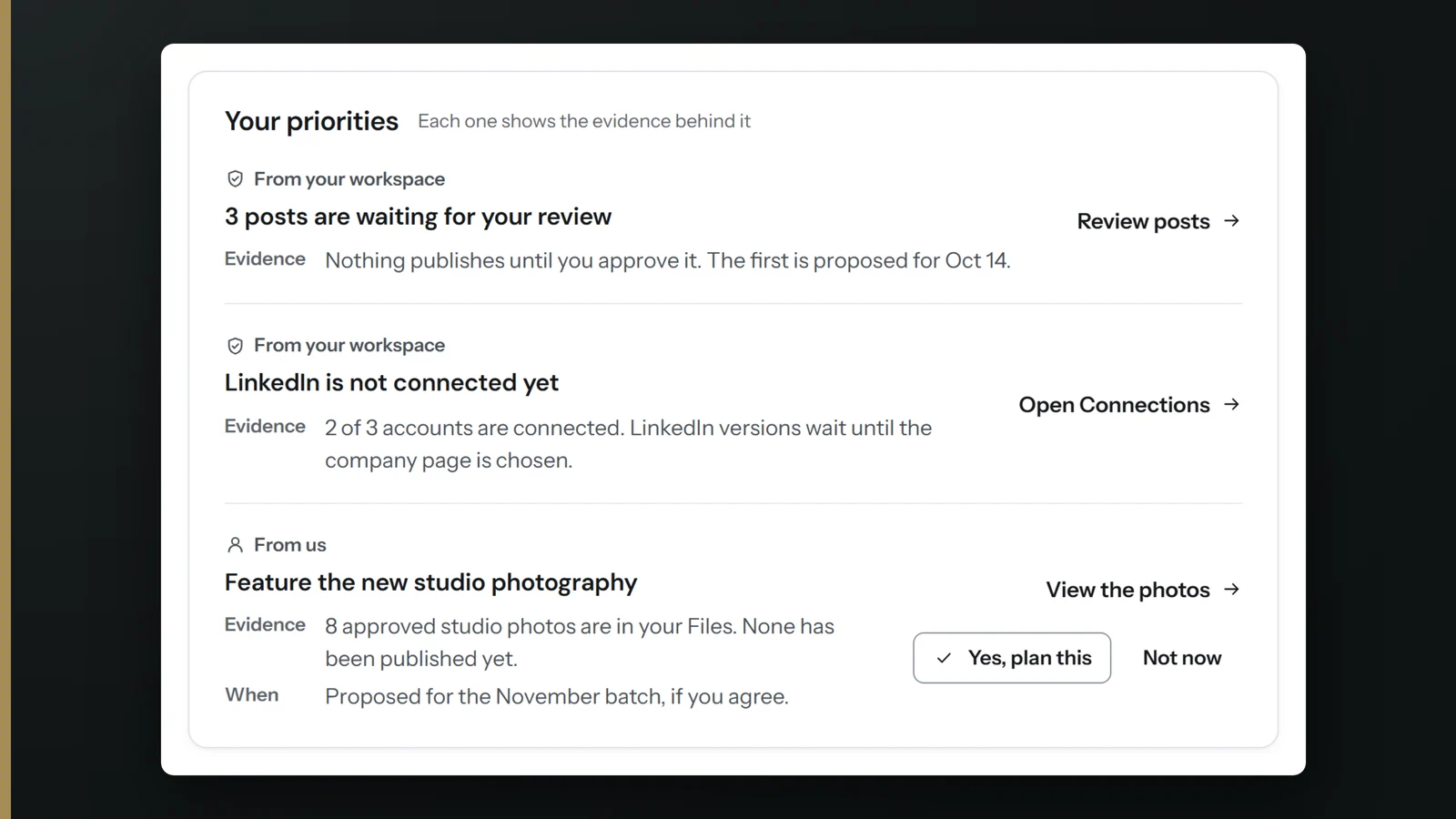
What doesn't change
The owner is still involved, and I'd rather say so plainly. The intake takes real thought, and a partner can only own a target the owner can describe. When the priorities aren't clear yet, that is the first thing to work out, and nobody can do that part for the owner.
I also don't promise a revenue number, and no honest partner can. What's on offer is the approach and the accountability for it.
And the scope has edges. Paid media, website builds and complex funnel work are scoped as projects rather than bundled into a monthly plan. For those, a good brief is the right tool.
Signs I look for
When an owner tells me about their marketing, a few details tell me who is really running it:
- The owner writes the weekly topic list.
- The same background gets explained to more than one helper.
- A good week of marketing depends on the owner finding a free hour on Sunday night.
- Feedback sounds like "just do it the way I would."
If two or three of those sound familiar, it's usually the structure doing it, not the people.
For owners who want to look around first, the free ScaleLounge account includes a content writer, a reply writer, a private portal, the Lounge and the Online Presence scan. There's no credit card and no trial clock, and everything made stays saved and stays the owner's. It isn't a partner, and I wouldn't describe it as one. My strategic direction and done-for-you execution are there when an owner is ready.
Rather hand this off than add it to your week? That is what ScaleLounge is for. See what ScaleLounge handles.
FAQ
Why do I end up managing the marketing help I hire?
Because help is usually hired for tasks, and nobody is asked to own the plan that connects them. The context sits with the owner, each helper sees one slice, and writing the brief is quicker than waiting. The owner becomes the connection between the parts almost by default.
Is writing a brief a bad sign?
Not on its own. A brief suits work with a clear edge and a clear finish, like a logo, a photo shoot or a one-time website build. It becomes a sign of trouble when ongoing marketing only moves because the owner writes one every week.
What does a marketing partner do differently from a freelancer?
A freelancer usually does the task that was asked for. A partner owns the plan and the follow-through inside an agreed scope, so the owner brings priorities and context and approves the work instead of directing it. At ScaleLounge that means working with me directly, with nothing published before the owner's yes.
